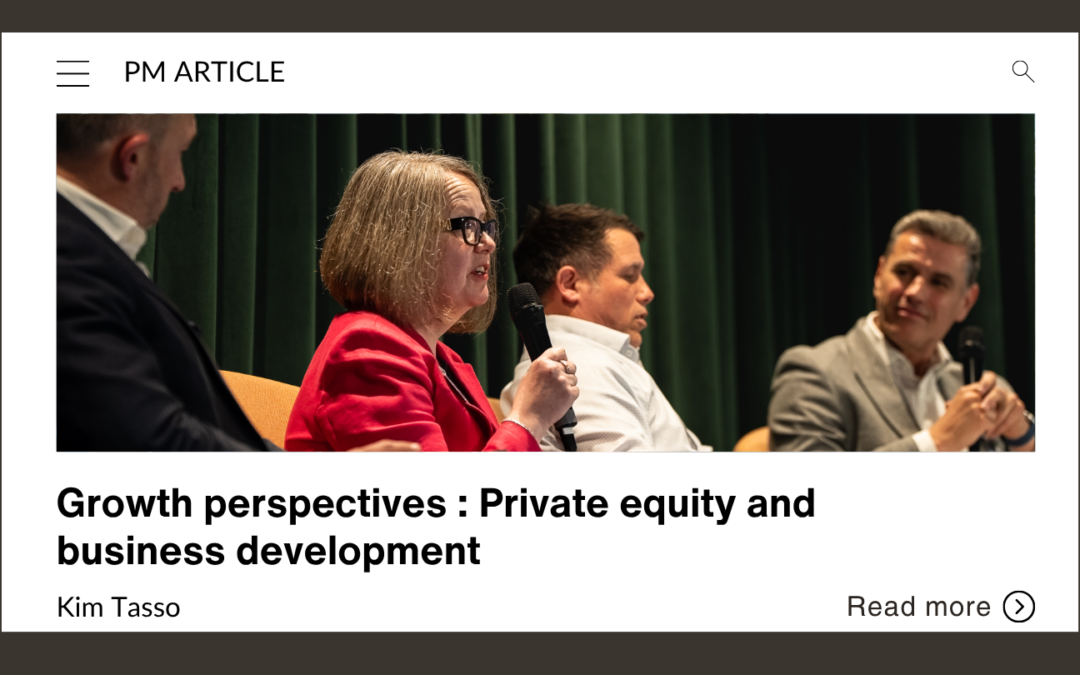
As private equity accelerates across professional services, firms attending the Managing Partners’ Forum’s Professional Services Growth Conference faced a critical question: How do you turn investment into sustainable growth? Kim Tasso joined them to discover the answer.
The second annual Professional Services Growth Conference took place on Friday 27th March in London. The morning focused on external investment and the afternoon on business development. The audience of firm-wide leaders was drawn from across the UK, with a third of the 140-plus delegates from law firms. It was good to chat to veterans, newbies and outsiders alike.
Is private equity investment right for your firm?
The dynamic duo Neville and Nigel featured strongly in the morning sessions. Neville Eisenberg is the former managing partner of City firm Berwin Leighton Paisner and now senior strategy adviser to Mishcon de Reya. While Sir Nigel Knowles spent 38 years in a number of senior roles at DLA Piper and subsequently helped DWF to list in 2019 and then delist with private equity backing in 2023.
A crash course in PE
The morning proved to be a crash course in private equity providing insight into how firms could go further, faster. We noted the market fragmentation – whereas leading accountancy firms dominate 20% of the global market, for law firms it is less than 1%.
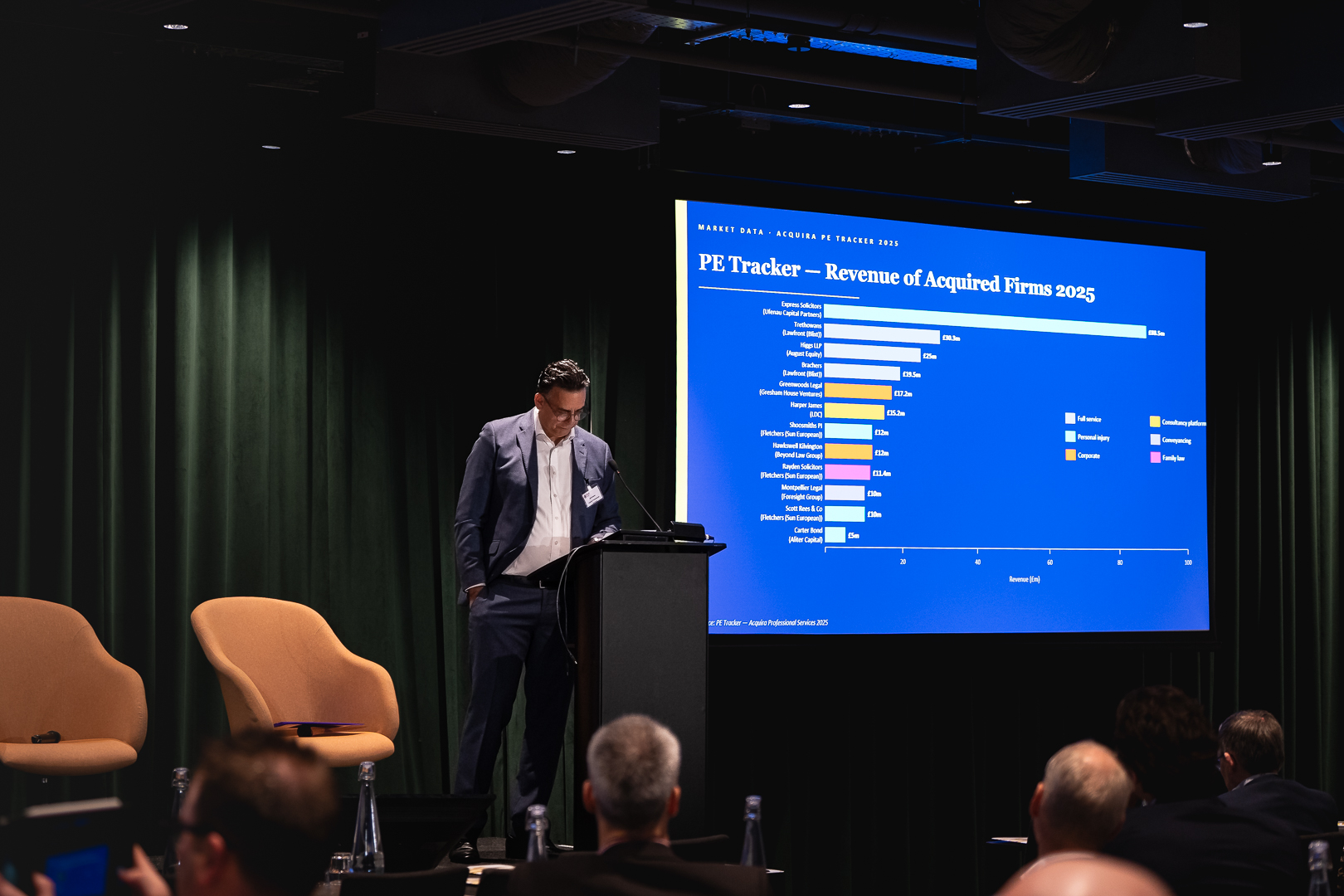
Jeff Zindani provided an illuminating talk with substantial deal data showing the accelerating extent of private equity in the UK legal sector. Whilst deal activity has risen 33% in three years (over 160 deals in 2025) the true number is likely double that.
Many firms with less than £5m turnover have been ‘hoovered’ up.
He shared Peter Drucker’s wisdom: “The greatest danger in times of turbulence is not the turbulence – it is to act with yesterday’s logic.”
PE success stories
It was encouraging to see the growth stories of so many law firms – including those focused on family, conveyancing and personal injury – that I had known since their start decades ago.
To attract investors, firms need to be process-driven, with repeatable work that is scalable. Investors need to see a cohesive Board with a clearly articulated vision and plan – and there needs to be ‘cultural alignment’.
The managed service model was explained – and for the first time I saw the significant tax advantage for equity partners.
Subsequent panel sessions – with experts from accountancy, property and consultancy firms – talked through the process: prepare a firm for external investment; conduct due diligence; acquire firms, teams and individuals; and establish systems and authority to ensure successful integration. It was more about principles than playbooks.
Professional services watchwords
Memorable quotes included “phantom EBITDA”, “cadence and cascade of communications”, “cultural diligence”, “immaturity of leadership”, “people-centred programmes”, “frolics of nonsense”, “pit of despair” (during change transformations), “assets walking out the door” and “build beautiful businesses”.
External investment presents a phenomenal opportunity for marketing and business development professionals – support for growth, real alignment, funds for ambitious marketing and BD programmes and a platform for career progression. Yet there are risks associated with the increased performance standards and accountability.
Just before lunch, last year’s Growth Champions handed over their batons to the new group comprising Bishop Fleming, LCP, Foster + Partners, PaceXL, Ignition, Twogether, Potter Clarkson, Turner & Townsend, Fisher German and Totum.
Business Development: frontline adviser skills, pipeline management and referrals
Professor Nigel Spencer (Queen Mary’s College) set the scene on boosting the confidence and client-handling skills of frontline advisors. He shared client pain points: understanding commercial context, project goal-setting, talking between matters, proactive communication, transparency, clarity about the team and the development of pre-partner advisers.
He then explored Unlocking The Client First Advantage research (conducted with Meridian West) into advisers’ challenges – communicating complex information, regular opportunities to talk to clients, what good looks like to clients, managing feedback and conflict, discomfort being the face of the firm and lack of experience working with clients. There were honourable mentions for programmes to build relationships with future buyers and peer-to-peer client action learning forums.
I particularly enjoyed the changes to firms in our AI-powered world – from pyramid, to hourglass, to cylinder and finally diamond organisational structures. And the impact this has on adviser careers, lifelong learning and the L&D support required at transition points. He mentioned the 70-20-10 model (experience, collaboration and planned learning) and reminded us of the McKinsey study showing how we need headroom and risk guardrails to develop most effectively.
Relationship training
Much early career training focused on the task of technical work and relationships were rarely addressed until later in careers. Simmons & Simmons FT Innovative Lawyers Award was based on tech nudges to create relationship habits. He showcased impressive AI-powered tools supporting regular, confident client communications and measuring BD habits.
There was strong support for secondments to help advisers learn more about the client environment, preferences and networks. He also advocated the role of client relationship associates – the quarterback of the client team – and for joint horizon-scanning exercises.
Marketing and sales systems
When Lee Curtis of LINAR Consulting asked, only a handful of delegates said they had disciplined pipeline management systems. There was a plea to understand how firms make money and to develop a cohesive digital ecosystem and share the metrics that matter. I loved the comment “drizzlemakers rather than rainmakers” and the recommendation to cut event budgets and invest in training advisers in empathy, listening and emotional intelligence instead.
AI received more mentions – in the clients’ consideration process, analysing cross-selling data, capturing BD intelligence, for tender research and in website content reviews. And there was appreciation of mature marketers helping juniors bridge the gap on experience and strategy. Professional selling is clearly a team sport.
Managing ‘spiky’ experts
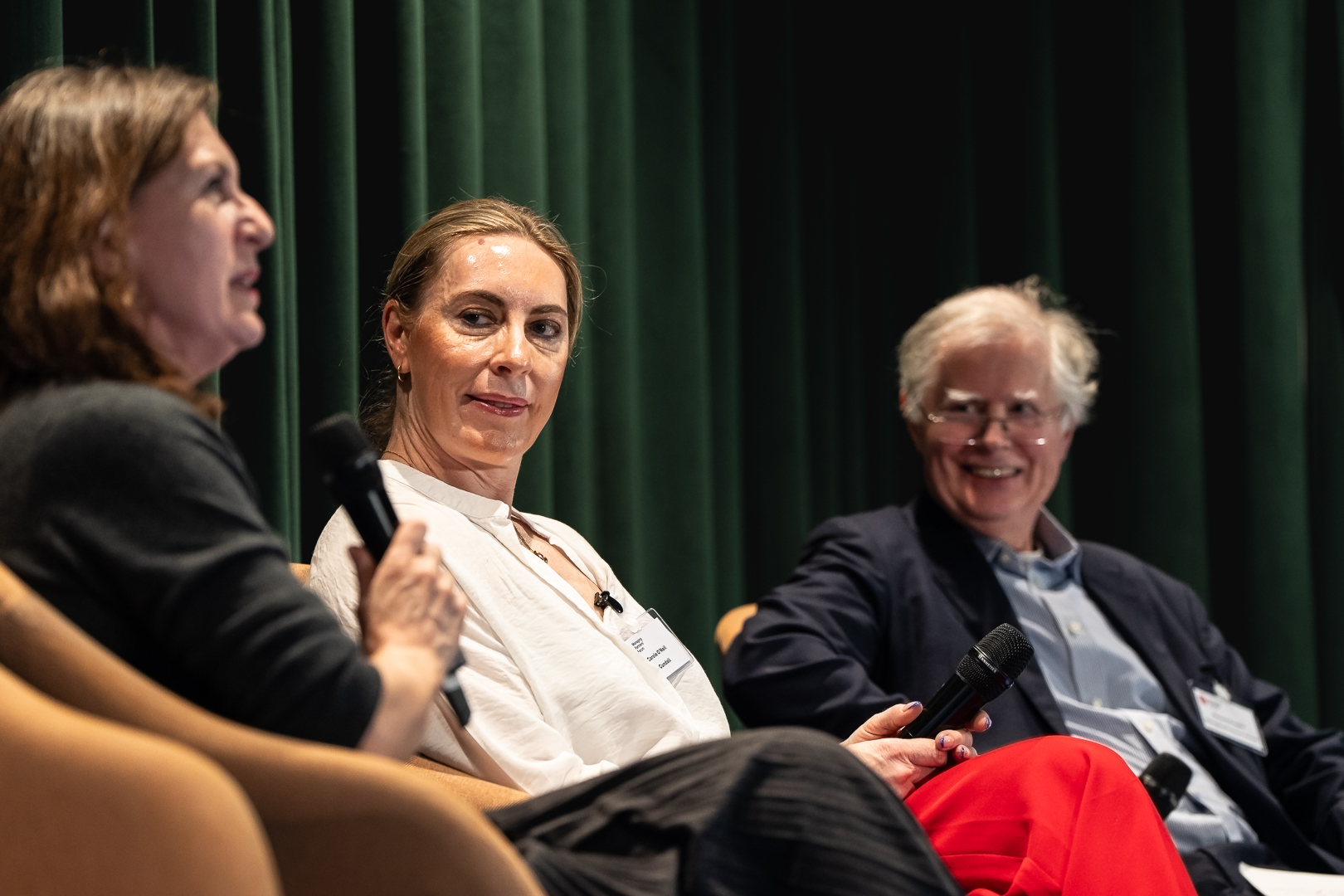
The final panel session featured war stories shared by two women in extraordinarily tough roles: Rachel Holmes CEO of Matrix Chambers – with 120 self-employed barristers, and Carole O’Neill, global managing partner of Cundall – a partnership of 1,400 engineers globally.
I enjoyed the discussion of how advisers rely on flawed proxies to measure their expertise – self-assertion, grey hair, social media and strong personal brands. Topics spanned the internal referral market within firms, questions about how clients identify experts and engagement in collective knowledge-sharing.
My takeaway? Richard Chaplin is a maestro – he seamlessly managed the absence of one co-chair and the early departure of another due to poor health. More seriously, external investment provides firms with the means with which to pursue their growth ambitions. Yet business development – in all its wonderful manifestations underpinned by data, discipline, skills, internal communication and culture – was the supercharged engine to deliver that growth after any “merger fest”.
Kim Tasso is the managing director of RedStarKim Ltd, a management consultancy specialising in professional services, and Tasso Talking Therapy Ltd, a psychotherapy practice.
Members only: if you want to add this reading to your CPD, please log in and complete the evaluation
Log in